As temperatures drop, many homeowners look for ways to keep more heat inside. Loft insulation can reduce heat escaping through the roof, but insulation and ventilation need to work together. If moisture from everyday activities is not removed, it can settle on cold surfaces and lead to condensation.
Understanding loft insulation and ventilation can help you make informed decisions before winter and spot when a damp patch may need further investigation.
Why insulation and ventilation need to work together
Insulation slows heat loss, helping the home stay warmer. Ventilation allows moist, stale air to leave and fresh air to enter. Kitchens, bathrooms and rooms where clothes are dried indoors can all add moisture to the air.
When warm, moisture-laden air meets a colder surface—such as a window, outside wall or roof space—water droplets can form. Repeated condensation may contribute to mould, so it is important to consider ventilation when improving a home’s insulation or draught-proofing.
How much loft insulation should you have?
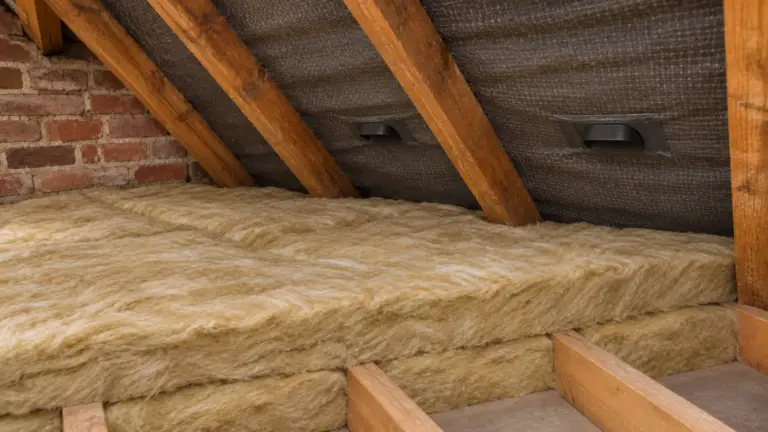
The amount needed depends on the type of insulation and the construction of the roof. For common mineral-wool loft insulation, the Energy Saving Trust recommends a depth of at least 270 mm. This is a general guide; unusual roof spaces, damp problems or rooms built into the roof may need a professional assessment.
If you are topping up existing insulation, check its condition and depth first. Do not cover wiring, recessed lights or equipment unless it is safe and suitable to do so. If you are unsure, ask a qualified installer to assess the loft before work begins.
Keep roof vents clear
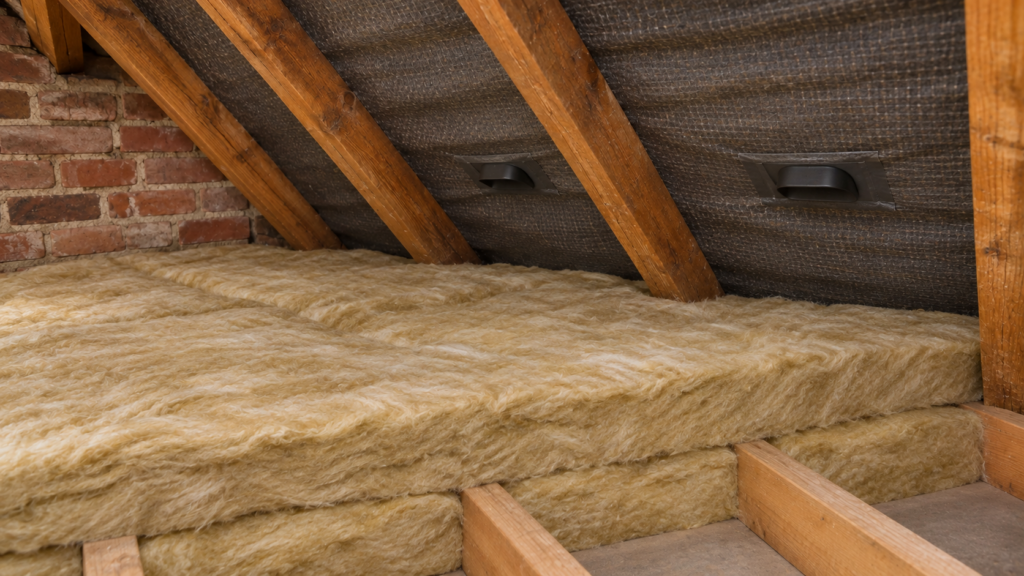
Loft insulation should not block ventilation openings. Depending on the roof design, ventilation may be provided by eaves vents, wall vents or tile vents fitted into the roof covering. These openings need to remain clear so air can move through the roof space as intended.
Tile vents can be one part of a ventilation solution, but the right type, number and position depend on the roof. Avoid guessing or adding vents without checking the roof construction. Energy Saving Trust advises homeowners not to block existing vents and to seek professional advice if they are unsure whether more ventilation is needed.
Simple ways to reduce moisture in winter
Everyday habits can help reduce excess moisture indoors:
- Use kitchen and bathroom extractor fans while cooking or showering, and leave them running afterwards if they have a run-on timer.
- Keep trickle vents and other intended air vents unobstructed.
- Put lids on pans where practical and close the kitchen door while cooking.
- Dry clothes outdoors where possible, or use a suitable tumble dryer.
- If you notice water on windows, wipe it away and check whether it keeps returning.
You do not need to leave windows open all day. Use the ventilation provided in your home and air rooms when practical. The right approach depends on the building and the ventilation system already installed.
Could damp be caused by something else?
Condensation is one possible cause of damp, but it is not the only one. A roof leak, damaged guttering, water entering from outside or another building defect may also cause damp patches. Staining, bubbling paint or a patch that grows after rain should be checked rather than assumed to be condensation.
Cleaning visible mould does not resolve the source of the moisture. If mould or damp keeps returning, arrange a suitable inspection so the underlying cause can be identified.
Get advice before making changes
Before adding insulation, replacing windows or sealing draughts, ask how the work will affect ventilation. The correct solution depends on the property and the roof design. For insulation installation or ventilation design, speak to a suitably qualified professional.
At All About Property Maintenance Ltd, we carry out roofing, general building and property repairs, as well as kitchen and bathroom renovations across Kent, London, Surrey & Essex. If you have a leak, damaged plaster or repair work as part of a wider home improvement, contact our team to discuss the job. Our services are listed on the services page.
Need help with a property repair?
If you have a roof leak, damaged plaster or repairs to discuss, contact All About Property Maintenance Ltd. We also carry out general building work and kitchen and bathroom renovations across Kent, London, Surrey & Essex.
Or email info@aaforproperty.co.uk. We’ll confirm whether the work fits our services and agree the scope before it starts.